

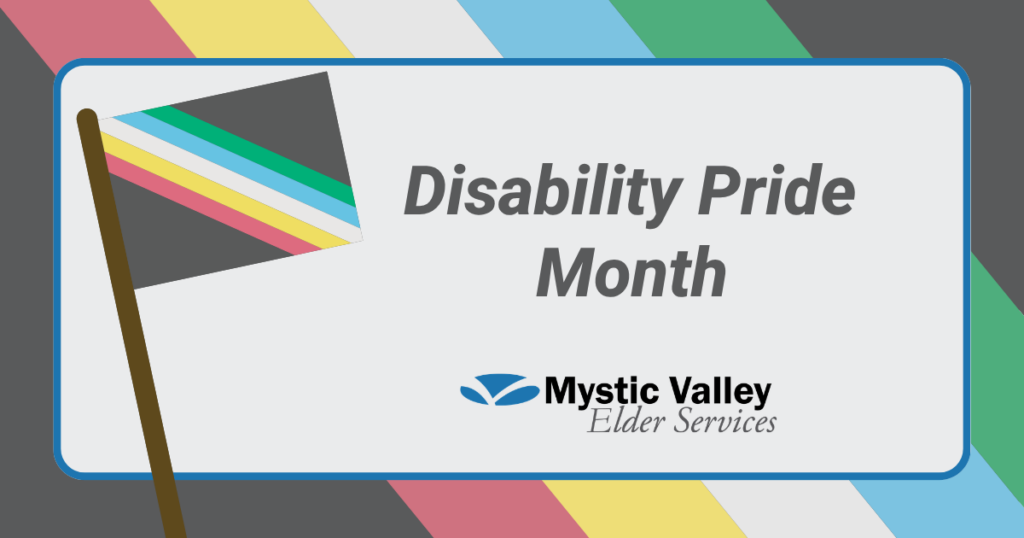
Each July, Disability Pride Month offers an opportunity to celebrate people with disabilities, recognize the disability rights movement, and reflect on the work still needed to build inclusive communities. The month was originally chosen to commemorate the signing of the Americans with Disabilities Act (ADA), a landmark civil rights law, on July 26, 1990. Today, Disability Pride Month is about more than one law. The meaning behind the month is one of five things you might not know about disability pride — check them out below!
Why Pride?
Historically, people with disabilities faced exclusion, shame, and condescension. As the disability rights movement grew over the 20th century, activists made an effort to end the stigma and shift the narrative to empowerment. The “pride” in Disability Pride Month reflects that.
Words Matter
This year, the Massachusetts Legislature voted to remove antiquated, offensive terms from the state’s General Laws. The language we use is powerful. It can reinforce stereotypes and ableism — or it can help us to include and support people of all abilities. (Melissa Reilly, an advocate with Down syndrome, is a great example of the importance of language in combatting ableism. Melissa served as a state senator’s aide for over a decade and helped shape the new policy.)
Not All Disabilities Are Visible
We all recognize the wheelchair symbol that designates public places for people with disabilities. Yet many disabilities that don’t require mobility aids are “invisible.” Neurodivergence (such as autism), autoimmune disorders (like Crohn’s disease and lupus), and mental health disorders (such as PTSD and depression) are just a few examples.
This Isn’t the First Disability Pride Flag
The flag got an upgrade in 2021, two years after it was first created. Each color on the flag represents a different aspect of disability and the overall design was crafted to maximize accessibility. We encourage you to learn more about the symbolism behind the flag.
We’re Not as Accessible as We Seem
The ADA had far-reaching impact, but accessibility for all remains a work in progress. Here in Massachusetts, we cherish our history, but it can be a challenge for people with disabilities. Cobblestone sidewalks are lovely, but difficult to navigate. Our aging MBTA system often needs repairs, which isn’t helpful when you need to use an elevator that’s out of service. Some T stations, especially along the Green Line, are not ADA compliant. The good news? Massachusetts is considered to have excellent support programs for people with disabilities, and there are widespread efforts to make Greater Boston safer for those who roll, walk, and cycle. Plus, the T has a plan to bring all Green Line stops up to accessibility standards by 2031.